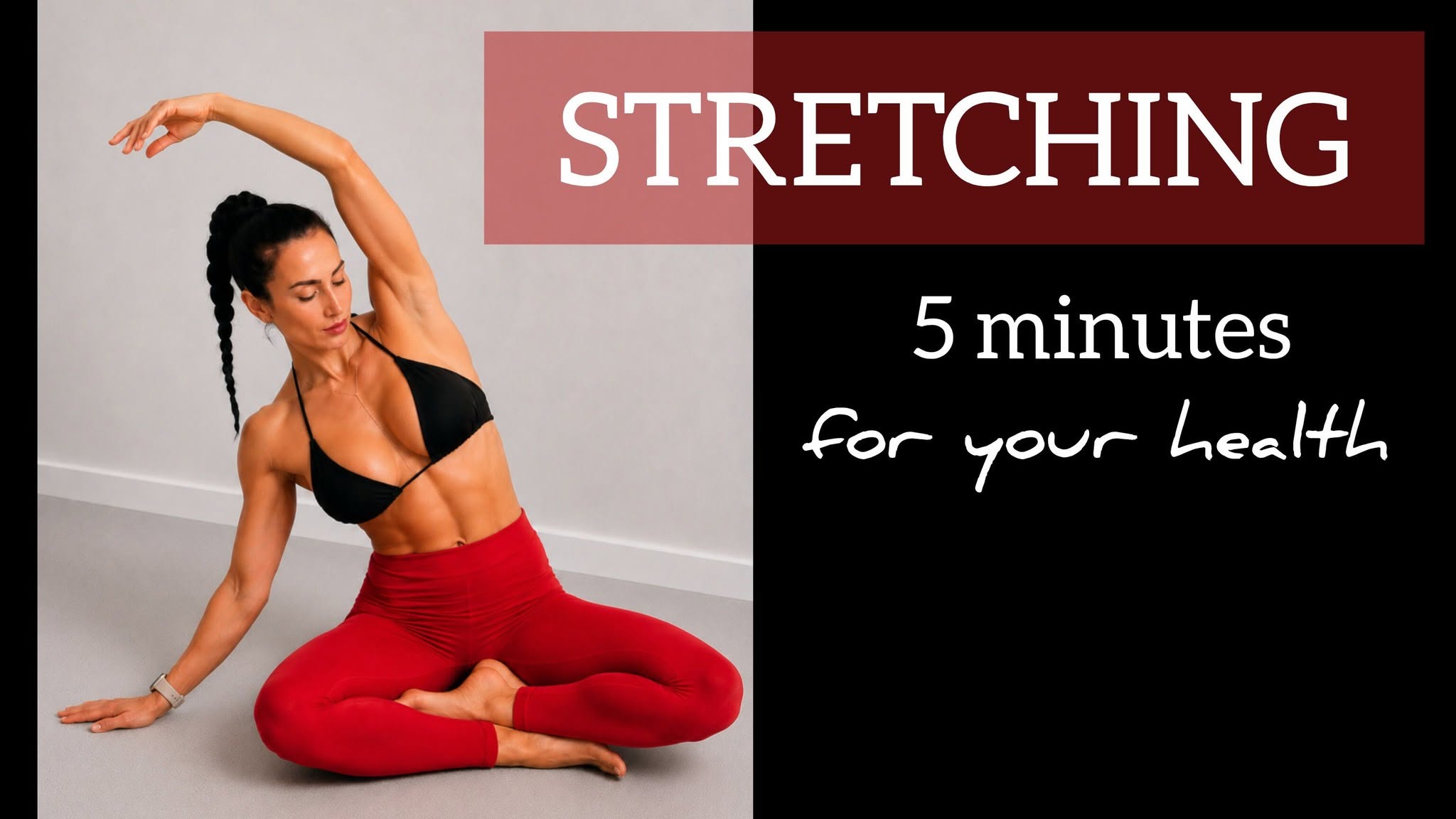
STRETCHING – 5 minutes for your health..
- By PROGRAMI MRŠAVLJENJA
- In HEALTH, STRETCHING, TRAINING

Stretching is a simple way to support your physical health and improve how your body feels every day. Regular stretching exercises help maintain flexibility, improve joint mobility, and reduce muscle stiffness. Even five minutes of gentle movement can make a difference, especially if you spend long hours sitting.
In addition, daily stretching supports better spinal mobility and helps release tension in your neck, shoulders, and back. It also improves body awareness, making it easier to recognize stiffness and restricted movement. As a result, you may feel more comfortable during everyday activities and experience greater freedom of movement.
Furthermore, stretching can promote relaxation and support your overall well-being. Slow, controlled movements combined with steady breathing help you unwind after a busy day. Over time, a consistent stretching routine can help maintain flexibility and encourage healthier movement habits. Most importantly, you don’t need much time to start taking better care of your body.
8 Stretching exercises to Improve flexibility and spinal mobility
These eight gentle stretching exercises can help improve flexibility, support spinal mobility, and reduce muscle tension. Below, you’ll learn how to perform each movement correctly and safely. We’ll explain the starting positions, proper techniques, and recommended duration for each exercise. Follow the instructions, move slowly, and breathe naturally. With regular practice, this simple daily stretching routine can support your physical health and overall well-being.
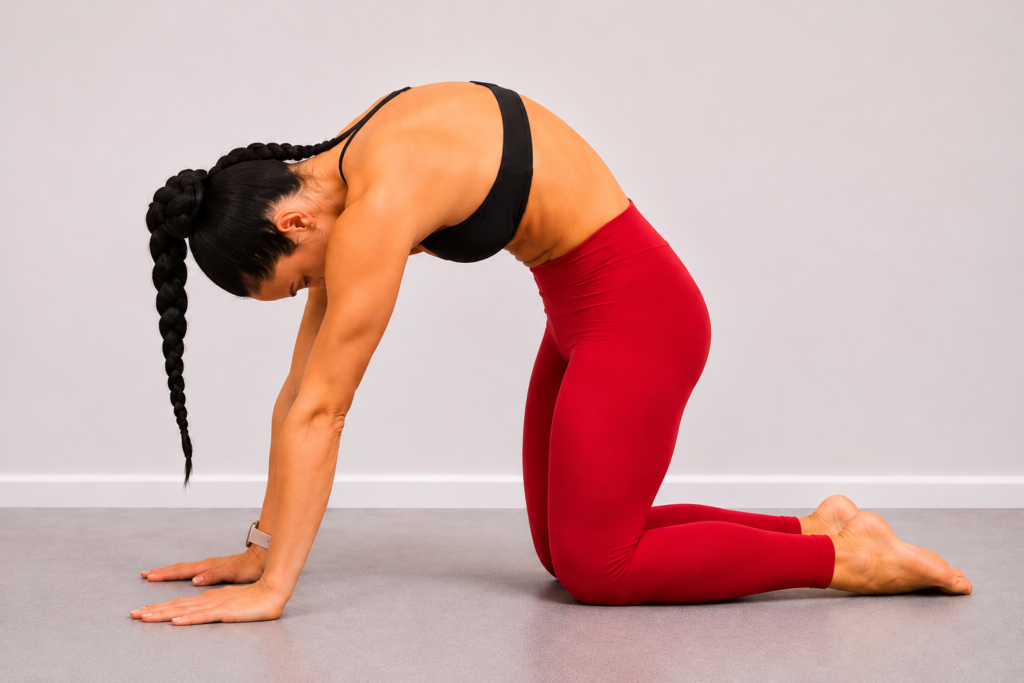
Cat pose (Marjaryasana)
Cat Pose is a gentle stretching exercise that improves spinal mobility and helps reduce tension in the back muscles. This movement gently stretches the muscles along your spine while encouraging better posture and body awareness. It can be especially beneficial for people who spend long hours sitting or experience back stiffness. In addition, regular practice supports back flexibility and helps you move more comfortably throughout the day.
How to perform cat pose correctly
Start on your hands and knees, with your wrists directly under your shoulders.
Position your knees hip-width apart and keep your spine in a neutral position.
Slowly exhale as you round your back toward the ceiling.
Gently tuck your chin toward your chest and draw your abdomen inward.
Hold the position for 15–20 seconds while breathing naturally.
Slowly return to the starting position without forcing the movement.
Repeat 3–5 times, maintaining slow and controlled movements
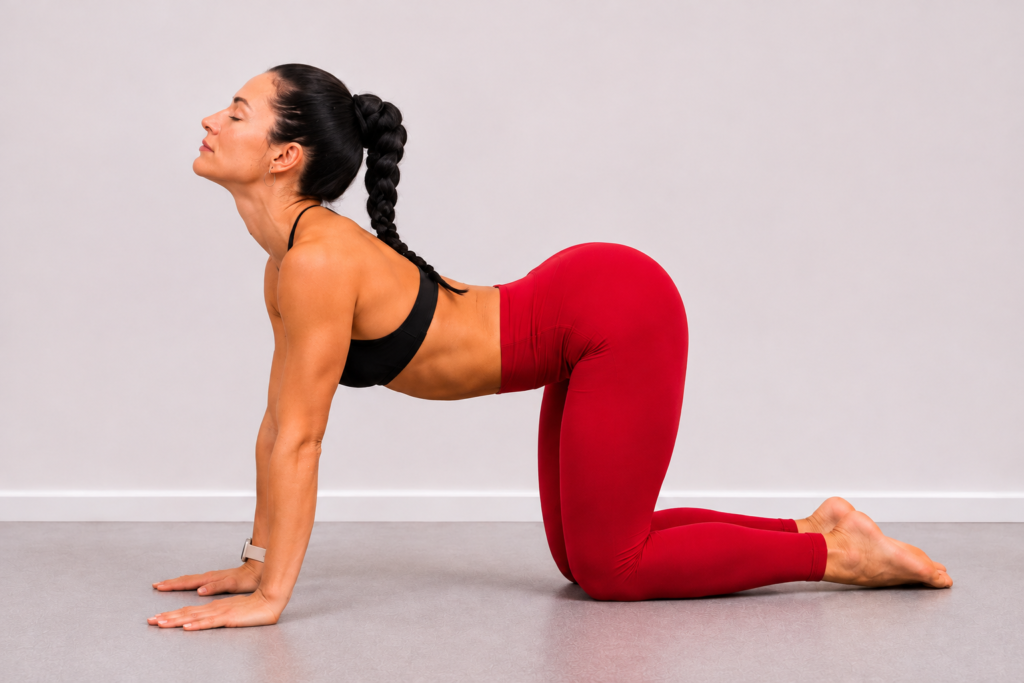
Cow pose (Bitilasana)
Cow Pose is a gentle stretching exercise that supports spinal mobility, improves back flexibility, and helps relieve muscle stiffness. This movement encourages controlled spinal extension while gently stretching the chest, abdomen, and front of the torso. In addition, Cow Pose promotes better body awareness and helps counteract stiffness associated with prolonged sitting. When practiced regularly, it can support healthy posture, improve movement control, and contribute to a more comfortable daily stretching routine.
How to perform cow pose correctly
Start on your hands and knees, with your wrists directly under your shoulders.
Position your knees hip-width apart and keep your spine in a neutral position.
Slowly inhale as you lower your abdomen toward the floor.
Gently lift your chest and tailbone toward the ceiling.
Keep your shoulders relaxed and look slightly forward without straining your neck.
Hold the position for 15–20 seconds while breathing naturally.
Slowly return to the starting position and repeat 3–5 times without forcing the movement.
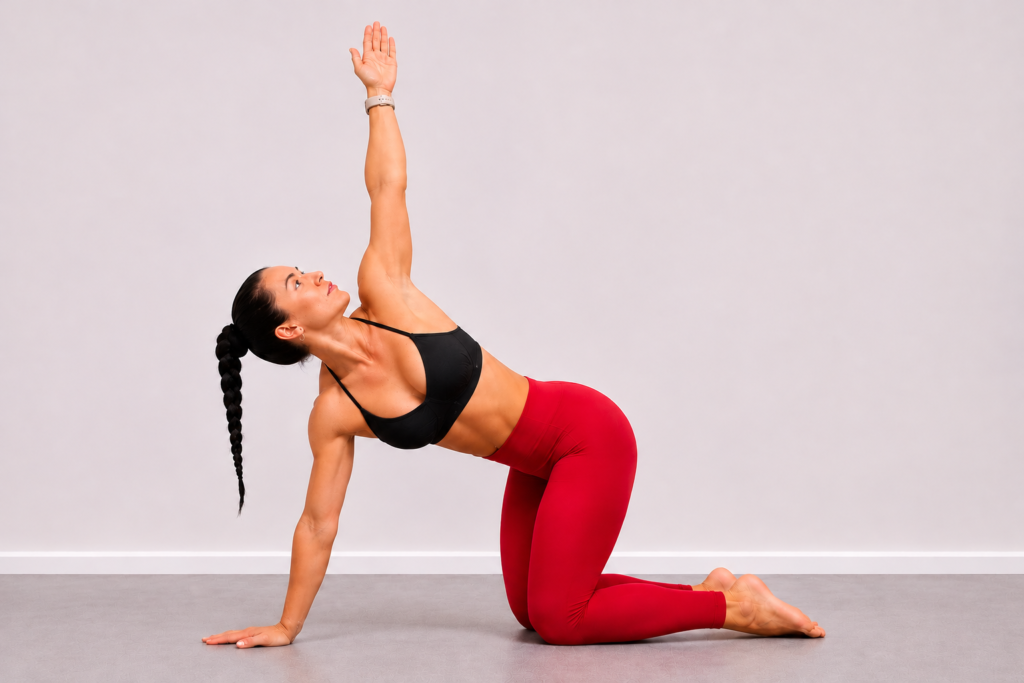
Kneeling thoracic rotation stretch.
Kneeling Thoracic Rotation is a gentle stretching exercise that helps improve thoracic spine mobility and reduce stiffness in the upper back. This movement encourages controlled rotation of the spine while supporting shoulder mobility and better posture. It is especially useful for people who spend long hours sitting at a desk. In addition, regular practice can improve body awareness and make everyday movements more comfortable.
How to perform the exercise
Start on your hands and knees, with your wrists directly under your shoulders.
Position your knees hip-width apart and keep your back in a neutral position.
Place your right hand behind your head, keeping your elbow pointed toward the floor.
Slowly rotate your upper body to the right, lifting your elbow toward the ceiling.
Keep your hips stable and avoid twisting your lower back.
Hold the position for 15–20 seconds while breathing naturally.
Slowly return to the starting position and repeat on the opposite side.
Perform 3–5 repetitions on each side, using slow and controlled movements.
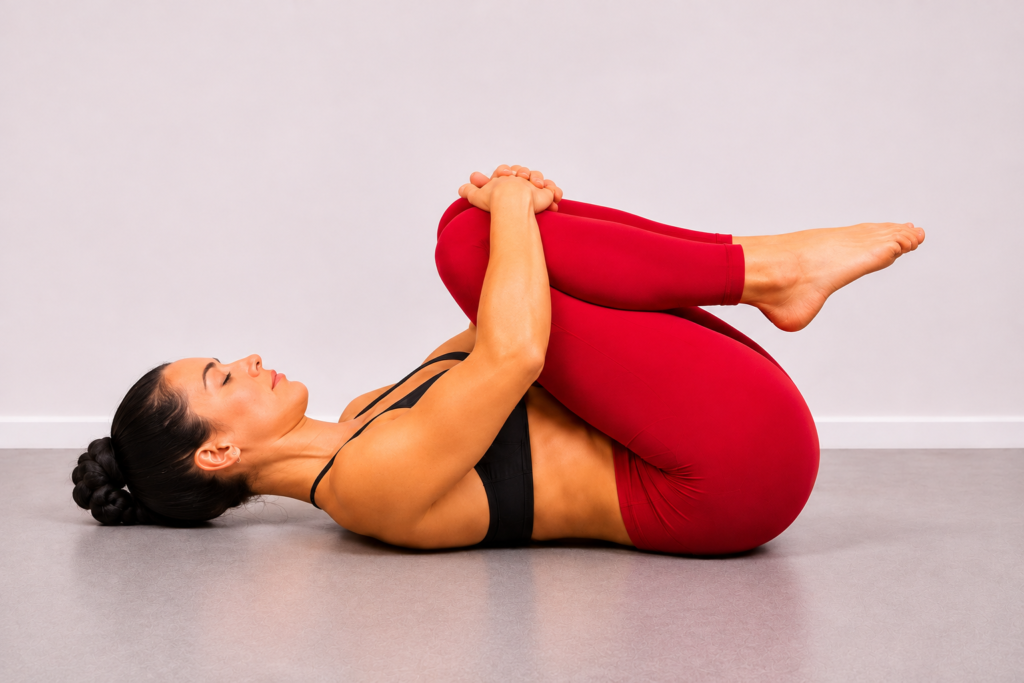
Knees-to-chest stretch (Apanasana)
The Knee-to-Chest Stretch is a gentle stretching exercise that helps reduce lower back stiffness and improve lumbar spine mobility. This movement gently stretches the muscles of the lower back and buttocks, promoting relaxation and greater comfort. It can be especially helpful after prolonged sitting or periods of inactivity. In addition, regular practice may support back flexibility, ease muscle tension, and improve comfort during everyday movements.
How to perform the exercise
Lie on your back with your knees bent and feet flat on the floor.
Slowly bring both knees toward your chest.
Wrap your hands around your shins and gently pull your knees closer to your body.
Keep your head, neck, and shoulders relaxed against the floor.
Maintain a comfortable stretch without forcing your lower back.
Hold the position for 15–20 seconds while breathing slowly and naturally.
Gradually release your legs and return to the starting position.
Repeat 3–5 times, using slow and controlled movements.
Important note: Breathing during stretching
Proper breathing during stretching helps your muscles relax and supports comfortable, controlled movements. Breathe slowly and naturally throughout each exercise. Avoid holding your breath or forcing deep inhalations. Inhale gently through your nose and exhale as you move into a comfortable stretch. Focus on steady breathing, relaxed muscles, and smooth movements. This approach can make your daily stretching routine more comfortable and promote relaxation.
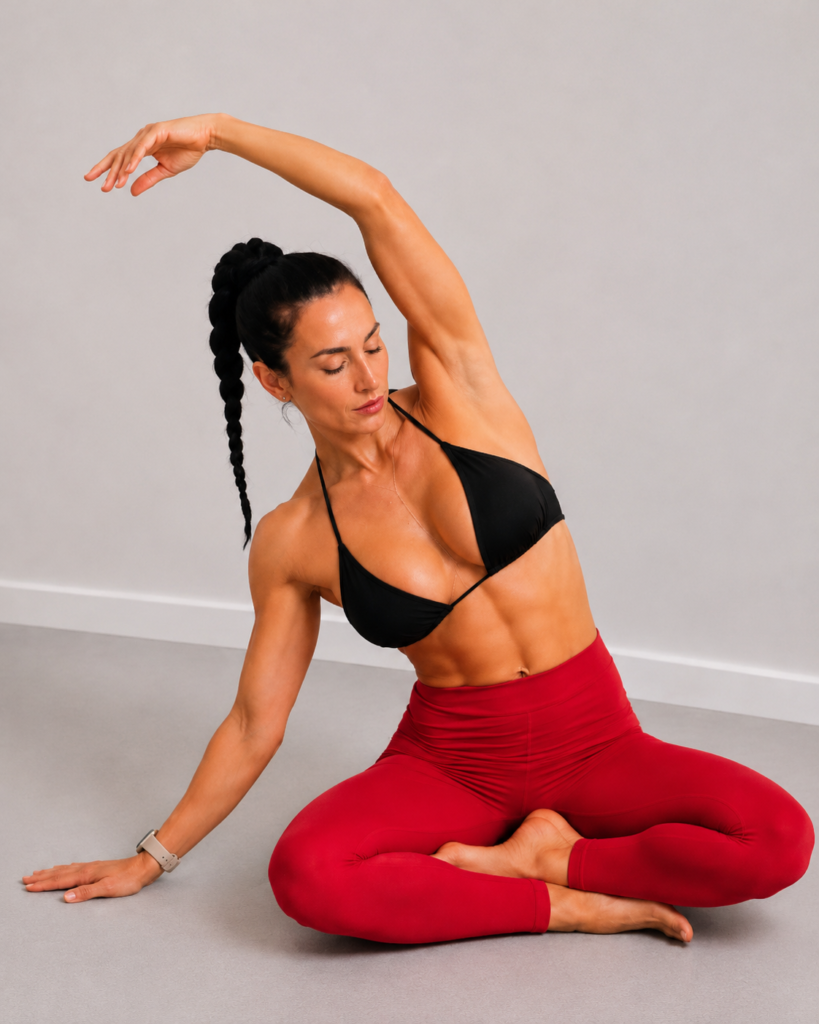
Seated Side Stretch – Spinal Flexibility and Mobility
The Seated Side Stretch is a gentle stretching exercise that improves lateral spinal mobility and stretches the muscles along the sides of your torso. This movement targets the oblique muscles, intercostal muscles, and surrounding tissues, helping reduce stiffness and improve flexibility. It can be especially beneficial for people who spend long hours sitting. In addition, regular practice supports body awareness, encourages comfortable movement, and helps release tension in the back and shoulders.
How to perform side stretch correctly
Sit on the floor with your legs crossed and your back straight.
Keep your shoulders relaxed and place your right hand on the floor beside your hip.
Slowly raise your left arm above your head.
Gently bend your upper body to the right, reaching your left arm overhead.
Keep both hips grounded and avoid twisting your spine.
Hold the side stretch for 15–20 seconds while breathing slowly and naturally.
Return to the starting position and repeat on the opposite side.
Perform 3–5 repetitions on each side, maintaining slow and controlled movements.
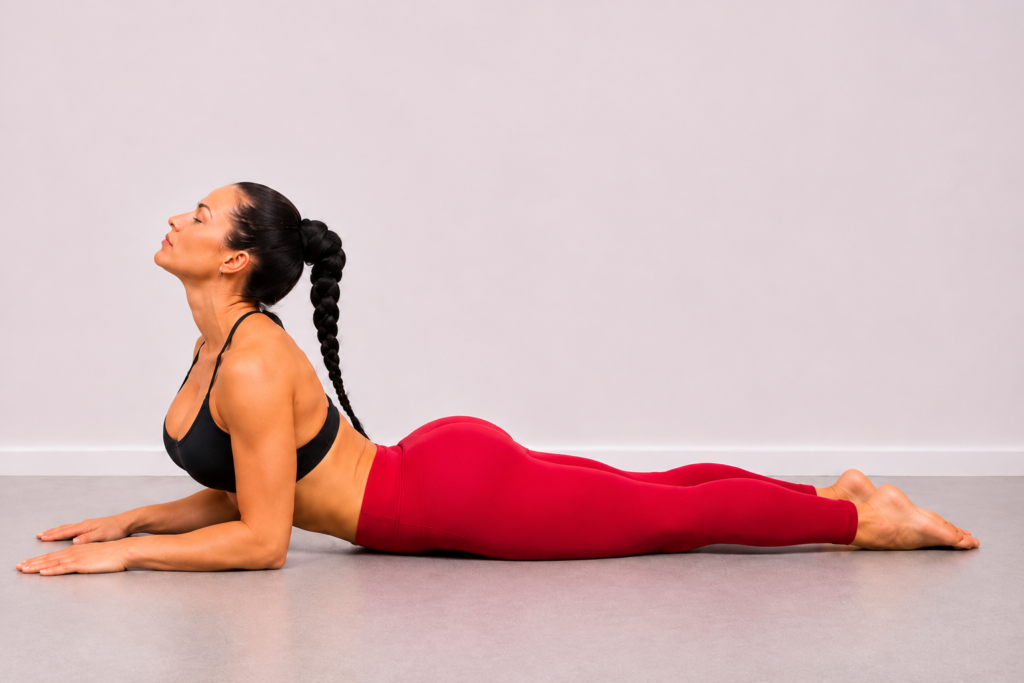
COBRA POSE
Cobra Pose is a gentle stretching exercise that supports spinal mobility and improves back flexibility. This movement stretches the chest, abdomen, and front of the torso while activating the back muscles. In addition, it encourages controlled spinal extension and helps improve body awareness. Regular practice may reduce stiffness associated with prolonged sitting and support more comfortable movement. When performed correctly, Cobra Pose can become a valuable part of your daily stretching routine.
How to perform cobra pose correctly
Lie on your stomach with your legs extended and the tops of your feet resting on the floor.
Place your palms beside your chest, keeping your elbows close to your body.
Gently engage your abdominal muscles and keep your pelvis in contact with the floor.
Slowly inhale as you lift your chest, using your back muscles and light support from your hands.
Keep your shoulders relaxed and away from your ears.
Look forward and avoid tilting your head too far backward.
Hold the Cobra Pose stretch for 15–20 seconds while breathing naturally, if comfortable.
Slowly lower your chest to the floor and relax.
Repeat 3–5 times, avoiding excessive pressure on your lower back.
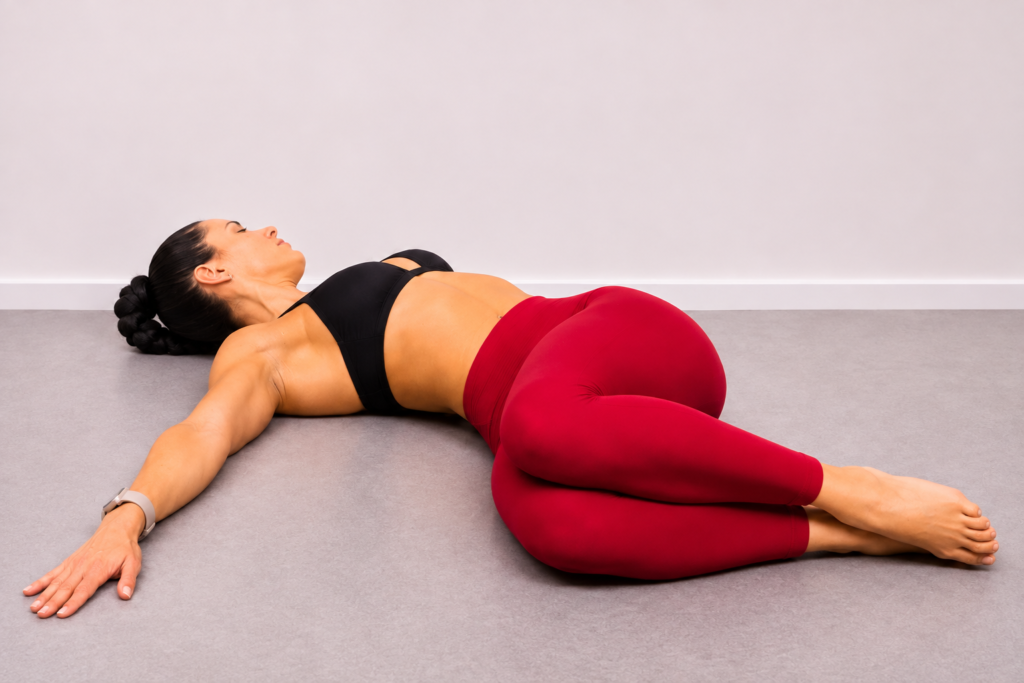
SUPINE SPINAL TWIST
The Supine Spinal Twist is a gentle stretching exercise that supports spinal mobility and helps reduce back muscle tension. This movement gently stretches the muscles of the lower back, hips, and torso. In addition, it encourages controlled spinal rotation and promotes muscle relaxation. It can be particularly helpful after prolonged sitting or periods of inactivity. Regular practice may improve back flexibility, reduce stiffness, and support more comfortable everyday movements.
How to perform spinal twist correctly
Lie on your back with your knees bent and your feet flat on the floor.
Extend both arms out to the sides, forming a T-shape with your body.
Keep your shoulders relaxed and resting against the floor.
Slowly lower both knees toward the right side while keeping them together.
Gently turn your head to the left, looking in the opposite direction.
Keep your upper back relaxed and avoid forcing your knees toward the floor.
Hold the spinal twist stretch for 15–20 seconds while breathing slowly and naturally.
Return your knees and head to the center, then repeat on the opposite side.
Perform 3–5 repetitions on each side, maintaining slow and controlled m
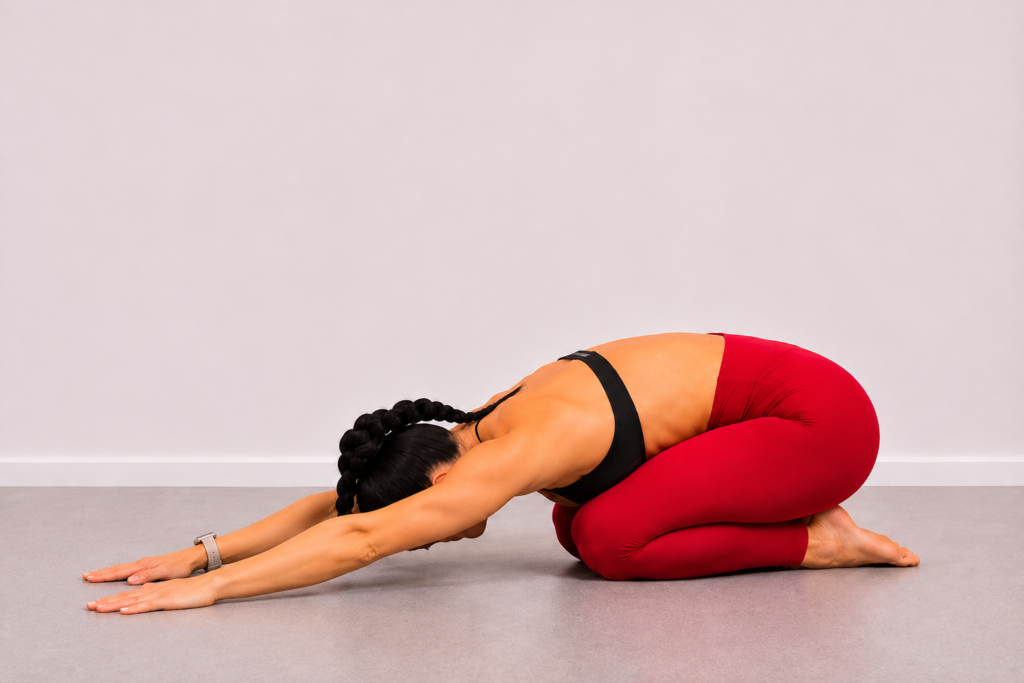
CHILD'S POSE – BACK STRETCHING AND RELAXATION
Child’s Pose is a gentle stretching exercise that helps relieve back muscle tension and promotes relaxation. This position gently stretches the lower back, hips, and shoulders while encouraging comfortable breathing. In addition, it supports spinal flexibility and helps reduce stiffness after prolonged sitting. Regular practice can improve body awareness and encourage relaxation after physical activity. As a result, Child’s Pose is a valuable addition to your daily stretching routine.
How to perform child's pose correctly
Start on your hands and knees, with your knees comfortably apart.
Slowly move your hips backward toward your heels.
Extend both arms forward, keeping your palms resting on the floor.
Gently lower your chest toward the floor while lengthening your spine.
Rest your forehead on the floor or a folded towel for additional support.
Keep your shoulders relaxed and avoid forcing your hips toward your heels.
Hold the Child’s Pose stretch for 15–20 seconds while breathing slowly and naturally.
Slowly return to the starting position, using your hands for support.
Repeat 3–5 times, focusing on gentle back stretching and relaxation.
WHEN IS THE BEST TIME TO STRETCH?
Stretching can be beneficial at different times of the day, depending on your needs and daily activities. In the morning, gentle stretching exercises can help reduce stiffness after sleep. During the workday, short stretching breaks can improve comfort after prolonged sitting. In the evening, a relaxing stretching routine may help release muscle tension and promote relaxation.
For better results, follow a few important rules. Start with gentle movements and avoid forcing your body into uncomfortable positions. Warm up with light activity before deeper stretches, especially when your muscles feel stiff. Hold each static stretch for 15–30 seconds, or less if needed. Breathe naturally and avoid bouncing or sudden movements. Most importantly, stop if you experience sharp pain, dizziness, or unusual discomfort.
You don’t need a long workout to support your flexibility and spinal mobility. Even five minutes of daily stretching can help you develop healthier movement habits. However, consistency matters more than intensity. Choose exercises that match your abilities and increase the duration gradually. If you have an existing spinal condition or recent injury, seek professional guidance before starting.
Remember, stretching should feel comfortable, controlled, and relaxing. Combine regular movement with good posture, physical activity, and adequate rest. These simple habits can support back health, improve everyday comfort, and contribute to your overall well-being.
- Share:
You may also like

RESISTANCE TRAINING – why is it my choice…
- October 12, 2026
- by PROGRAMI MRŠAVLJENJA
- in TRAINING
RESISTANCE BANDS – strength, mobility and stability
GREEN TEA AND HEALTH…